Rabu, 28 April 2021

Biography

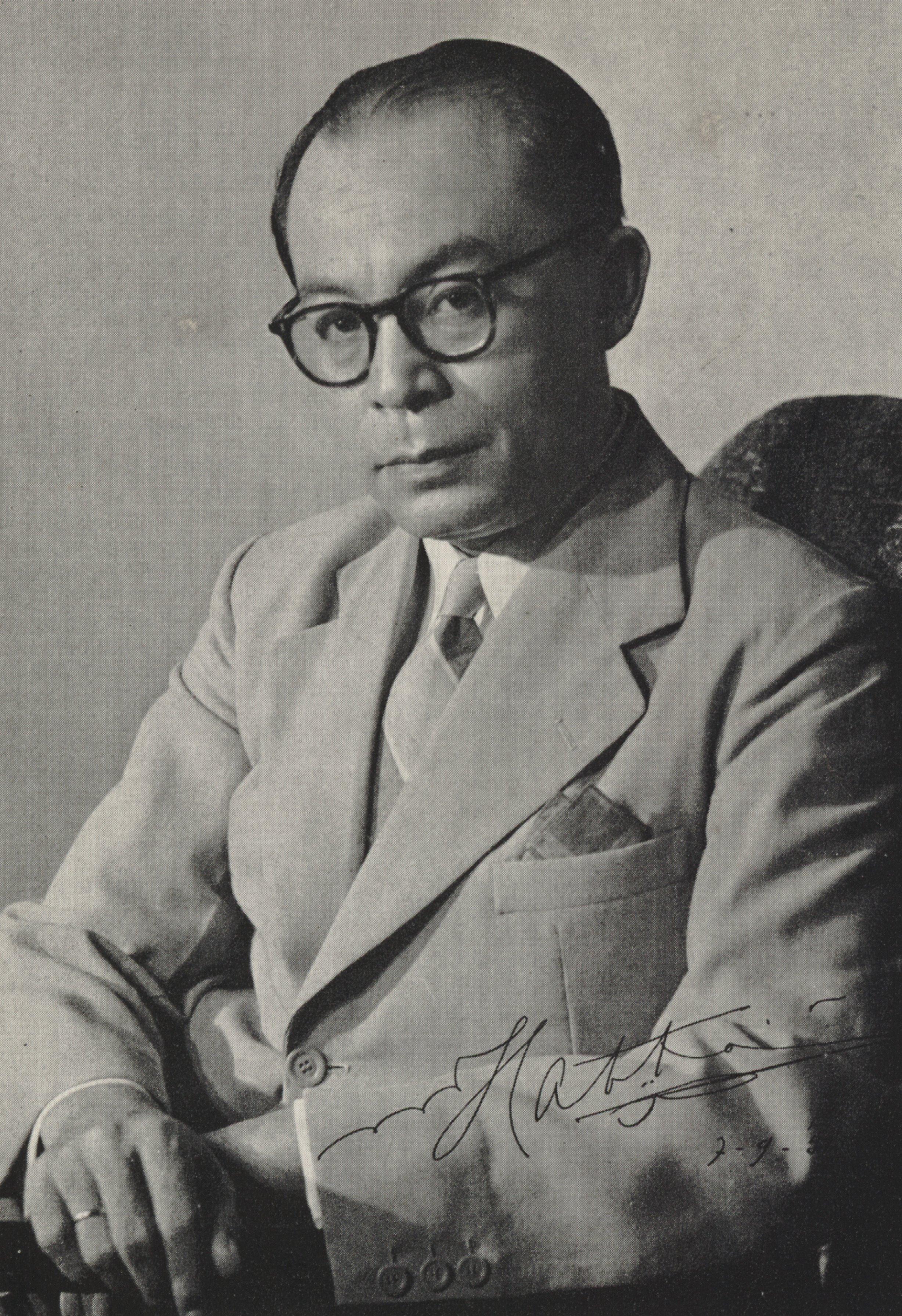
 Berkas:Mohammad Hatta 1950.jpg - Wikipedia bahasa Indonesia, ensiklopedia  bebas


    Mohammad Hatta or often called Bung Hatta was the first Vice President of Indonesia. Mohammad Hatta was born in Bukit tinggi, West Sumatera on August 12th, 1902. His father is Haji Mohammad Djamil and his mother is Siti Saleha. His father died when he was eight months old. Hatta married to Rahmi Hatta on November 18th, 1945. The couple had three children named Meutia Farida Hatta, Gemala Rabi’ah Hatta, and Halida Nuriah Hatta.

Hatta started his education at a private school named Sekolah Melayu. Then he went to ELS (European Language School). He continued his school to MULO (Meer Uitgebreid Lager Onderwijs). Hatta began to show his interested in politics and national movement since he was sixteen years old. He joined Jong Sumatranen Bond and he was chosen as the treasurer.

In 1919, Hatta went to Hogere Burgerschool (HBS) in Batavia (Jakarta). He finished his study with distinction in 1921 and he was allowed to continue his study to Rotterdam School of Commerce in Netherlands. He took economics as his major and got a doctorandus degree. He then continued to pursue his doctorate degree, but he didn’t finish his thesis because politics had taken over his life.

In Netherlands Hatta joined the Indische Vereeniging. In 1922, Indische Vereeniging changed its named to Indonesische Vereeniging (Perhimpoenan Indonesia). Hatta was the treasurer from 1922-1925 and then he became the chairman from 1926-1930. Perhimpoenan Indonesia then changed from a student organization to political organization that demand for Indonesia’s Independence. It expressed its voice through a magazine called Indonesia Merdeka of which Hatta was the editor.

Hatta attended congresses all over Europe to gain more support from other nations, he always as the chairman of Indonesia delegation. By the middle of 1927, Perhimpoenan Indonesia’s activites had alarmed the Dutch authorities. On June 1927, Dutch authorities put Hatta and four other Indonesian activists in jail. In 1929, Hatta and other Perhimpoenan Indonesia activists were released.


Rabu, 21 April 2021

Vanity, what is thy price?


The drama Pride and Vanity tells the story of Madame Loisel, a beautiful woman who is born in a poor family. and he felt trapped in an unhappy life when he married a cashier who worked for the government. She felt miserable because she felt that she should be born luxurious because of beauty.

 One day, her husband (Monsieur Loisel) gave her a surprise invitation. Madame Loisel was embarrassed by the old dress she owned. Monsieur Loisel gave him 400 francs to buy a new dress. Then Madame Loisel complained that she didn't have any jewelry to wear. Monsieur Liosel suggested borrowing jewelery from his old school friend, Mademe Jeanne Forestier.

W During the party, Madame Loisel lost her borrowed necklace. Madame Loisel did not tell Madame Forestier that she had lost the necklace. He chose to replace it. When returning it, Madame Forestier said that the necklace she had lent her was a fake. Whereas Madame Loisel replaced it at a very high price, so that Monsieur Loisel had to go into debt for the sake of his wife's pride and dignity.

Hopes and Dream

 Hopes and Dreams for Baby | This Daddy Life

Hopes and dreams

Hope is something that we want to happen and we work very hard for it to happen. But we are not sure whether it will happen or not and sometimes we can’t do anything about it. Hopes and dreams signal future intentions (Ben, 2012).

The verb ‘hope’ is to express:

  • An event that possibly happened (past)
  • A event that will possibly happen (future)

To say what you hope about the past, you use the simple past:

  • hope she found the restaurant.
  • hope he passed his class last semester.

To say what you hope about the present, you use the present:

  • hope he‘s all right.
  • hope he knows where the clinic is.
  • hope he‘s having a good time in Florida.
  • hope he likes Italian food.

To say what you hope about the future, you use the present (or the future, although it is less common)

  • hope he has a good time in Florida next month. (I hope he’ll have a good time in Florida next month.)
  • hope she comes to see us when she passes through New York.(I hope she’ll come to see us when she passes through New York.)

How to express our hopes:

a. Sentence structure to express hope using ”ing verbs”.

Subject-ing verbComplement
Iam hopingfor some good weather tomorrow
Iam hopingfor a good grade in English.

b. Sentence structure to express hope using “to” and “that”.

SubjectVerbComplement
Ihopeto study in America next year.
Ihopeto do something beneficial for my country
Ihopethat there is enough food for everyone in the party.

c.Sentence structure to express hope using verb tenses.

SubjectVerbComplement/object
IhopeRahmat found the place.
Ihopemy brother passed the test.
IhopeDessy finds my wallet.
IhopeIwan is having a good time in Bali.
Ihopemy brother will have a good time in Jakarta
IhopeYanti will not see us when she passes by.

Examples to express hope:
– I want to become a doctor.
– I am hoping to finish all my work on time.
– I hope I will realize all my dreams.
– I hope that I will always be honest.
– I hope that I will never lie.
– I hope that I will never smoke.
– I want to get my homework done.